Home Staging for Real Estate Agents
Harry Lew |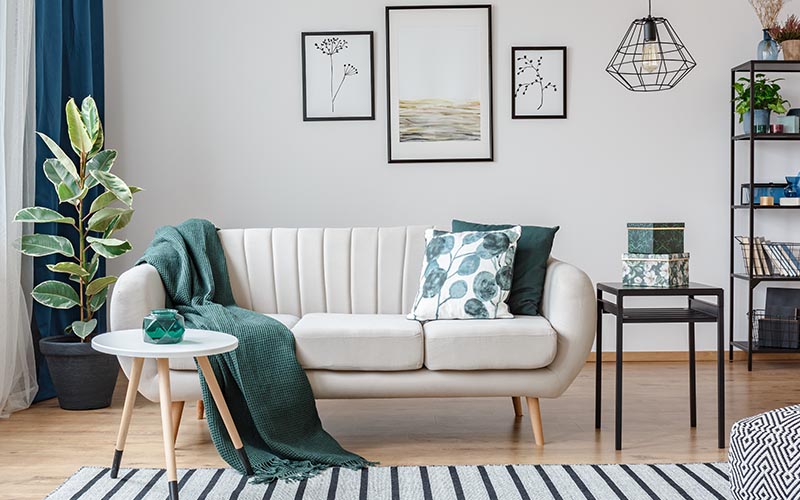
Home staging gives listed homes extra appeal. Should you use this technique more frequently? Yes, but only with the right properties, using the right techniques, and in collaboration with a talented home stager.
In today’s competitive real estate marketplace, homes need all the help they can get to attract prospective buyers. So it’s no surprise that home staging—the practice of upgrading a property’s visuals to make it more appealing—is becoming increasingly popular among sellers’ agents and their clients.
According to a National Association of Realtors® survey, 83 percent of buyer’s agents believe staging helps prospects visualize themselves living in a home, which increases their interest in the property. The survey also found that more than 50 percent of sellers’ agents said home staging shortens how long a home stays on the market, with a quarter saying it greatly reduces the time and 28 percent saying it slightly decreases it.
“Buying a house is more than a financial decision, says NAR President John Smaby, a broker at Edina Realty in Edina, Minnesota. “Buyers aren’t just making an investment in a property. They are purchasing a place to call home—to raise their children, to begin a new chapter, or to retire to a new season of life. Realtors® understand the importance of making a residential property as welcoming and appealing as possible to potential buyers.
“While every Realtor® doesn’t use staging in every situation,” he notes, “the potential value it brings is clear to both home buyers and sellers.”
The value may be increasing, as well, due to the proliferation of cable TV, YouTube, and web programs that showcase homes. According to the NAR survey, 2019 Profile of Home Staging, 38 percent of buyer and seller agents said the new home shows have affected their business, while 20 percent of buyers said they were disappointed in “the look” of homes they shopped for compared with those they saw online or on TV. With visuals becoming more prominent on real estate shows, it’s no surprise buyers now want their own properties to look as good their media competition.
The NAR report identified multiple ways home staging influences buyers. Not only does it make it easier for them to visualize themselves living in a home, it makes them more willing to do a walk through. Plus, it has a positive impact on the size of their offers when a home’s staging resonates with a buyer’s taste. It also helps buyers minimize property flaws.
Although the case for home staging is strong, whether you and your customers will benefit from it hinges on whether you do it with the right properties, use the right techniques (if you stage homes yourself), or find a talented home stager with whom to collaborate. The NAR report provides insight on some of these issues.
For example, agents and home stagers must be strategic about which rooms to stage. From the buyers’ agent perspective, the most important rooms to stage (in descending order) are the:
- Living room (47 percent of buyers said it was the most important room)
- Master bedroom (42 percent)
- Kitchen (35 percent)
- Dining room (24 percent)
- Yard/outdoor space (21 percent)
- Bathroom (19 percent)
- Children’s bedroom (11 percent)
- Guest bedroom (8 percent)
When the most important rooms are visually enhanced, buyers’ agents experienced increases in offers ranging from 1 percent to 20 percent. Most agents (25 percent) saw increases of between 1 to 5 percent, whereas 12 percent saw increases of between 6 to 10 percent. Four percent of buyers’ agents experienced increases of between 11 to 15 percent, while 2 percent experienced a 16 percent to 20 percent boost, and 1 percent saw an increase of more than 20 percent.
Pinpointing the right homes to stage appears to be an essential business practice, according to the NAR survey. It found that 28 percent of sellers’ agents said they staged all the homes they sell, while 13 percent only staged those that have proven difficult to sell. Another 7 percent staged only high-end homes. The report also found that 45 percent of sellers’ agents do not stage at all, but encourage sellers to declutter their homes themselves or to undertake repair projects to enhance the property’s visual appeal.
Of course, the issue of who pays for home staging is an important one. The NAR found that a common approach is for the sellers’ agent to personally stage the home as part of the service provided to the homeowner (26 percent). Alternatively, the home seller can hire a stager prior to listing the home (18 percent) or the agent can provide the service for a fee (17 percent). A fourth option is for the agent to bring in an independent home stager and pay that person’s fee (15 percent). Other approaches including having the seller pay for staging after the home is sold (5 percent), having the selling agent’s broker pay for it (2 percent), or some other arrangement (18 percent).
Sellers’ agents also experienced an increase in sale offers, with 22 percent reporting an increase of 1 percent to 5 percent compared to similar homes. Seventeen percent of sellers’ agents saw increases of between 6 and 10 percent.
Perhaps the biggest benefit of staging for sellers’ agents was shortening the time the home spends on the market. The majority of sellers’ agents saw either a great decrease (25 percent) or a slight one (28 percent). This may be the greatest single motivation for agents to recommend home staging to their clients.
In cases in which sellers’ agents don’t recommend formal staging, they typically encourage sellers to take a DIY approach. This includes actions such as:
- Decluttering (95 percent)
- Cleaning the entire home (89 percent)
- Removing pets during showings (83 percent)
- Cleaning carpets (78 percent)
- Doing minor repairs (77 percent)
- Depersonalizing the home (70 percent)
- Landscaping outdoor areas (67 percent)
- Painting walls (66 percent)
- Doing paint touch-ups (63 percent)
- Having professional photos taken (63 percent)
With hard data showing that home staging has beneficial results, the question becomes what should you do as an agent? For example…
- If you don’t typically have your listings staged, should you start doing so?
- And if you start, should you do it yourself or hire it out to a home-staging specialist?
Only you can answer the first question based on your professional goals and resources. Your answer will, in part, depend on expected ROI. Are you confident the home will snare a higher price as a result of staging and that the increase will be more than the cost of your staging time or of hiring a professional stager?
How you answer the second question depends on your available time and talents. For example, if you are fully booked with the traditional sales and marketing aspects of your job, will you have time to begin staging homes, too? If you do, do you really have the talent to pull it off? Not everyone has the knowledge and visual flair to stage a property. If you lack those abilities, you may want to bring in someone who does, even if you must pay that person. If staging results in a higher closing price, less time on the market, and the avoidance of price reductions, the fee may be a bargain.
Still, hiring stagers can be a tough sale for many agents. That’s because agents may have to pay them before they get paid for selling the home. But stagers say the benefits of their craft far outweigh the short-term disadvantages. For example, according to Debra Gould, owner of Staging Diva, a training firm, enhancing a home’s visuals leads to better photos. This makes a home more magnetic on real estate websites, which increases clicks from interested prospects.
Another benefit of working with a home stager, says Gould, is that the person can tell the seller things an agent can’t for fear of losing the listing. Or maybe the homeowners are selling their property due to divorce. Having a home stager involved can prevent the agent from having to mediate family conflicts over selling the family homestead.
Finally, working with a home stager doesn’t necessarily have to be an agent expense. You often can demonstrate to the seller that the staging cost will likely be insignificant compared to a $10,000, $20,000, or $50,000 price reduction to get a home sold. Gould says staging typically costs anywhere from a few hundred to several thousand dollars to furnish a large or luxury home, substantially less than a price reduction.
However, if you do have experience with interior decorating and/or have visual flair, then helping your clients with staging may be a reasonable decision. However, it’s important to follow staging best practices to make sure you achieve a good outcome.
Experts suggest that before you begin staging, ask clients to declutter and depersonalize their homes. This means stashing extra “stuff” that gives the impression of inadequate storage space. Depersonalizing is important because you want to encourage prospects to envision themselves living there. If the owner’s personal mementos are everywhere, it will be hard for them to do that.
After the seller declutters and depersonalizes, consider adopting the following staging strategies (courtesy of the home selling website Zillow.)
- Make sure there’s sufficient lighting in every room.
- Arrange the furniture to create spaces where people can converse directly with each other.
- Eliminate bold or garish color accents that may not appeal to mainstream buyers.
- Fix problems with finishes such as faded or chipped paint, cracked grout, or torn wallpapers.
- Check to make sure everything works. Repair any hardware that is problematic.
- Spiff up the home exterior, eliminating negative curb appeal from overgrown lawns, bad paint, or moldy siding.
- Position design elements in groups of three, fives, or sevens. This creates tension that enhances visual appeal.
- Set the dining-room table as if it were a festive occasion.
- Set out new towels in bathrooms, not those in use for years or decades.
- Leverage empty rooms by creating an additional living/working space.
Finally, try to avoid staging mistakes that repel rather than attract buyers. Writing on The Close, Emile L’Eplattenier warns against:
- Staging a home without knowing its target market, which will result in furnishings that may turn off prospects.
- Not using a different color, wallpaper, or stencil to create an accent wall within a room. This can add depth and drama to boring rooms, he says.
- Not replacing sad and dated window treatments with something timeless and universal such as sheer white curtains with accompanying dark velour panels.
- Using boldly colored or patterned pillows, which can be expensive, overly personal, and obtrusive to the average prospect.
- Failing to dress up an empty bed frame with a mattress and high-quality linens.
- “Gendering” children’s bedrooms, which may exclude a large swathe of your target market (parents who have children of the opposite gender).
- Trying to stage rooms for multiple purposes or themes, which ends up confusing prospective buyers, not helping them envision living there.
- Using fake plants, which send a phony vibe and are surprisingly expensive to purchase.
- Mounting the kind of cheesy wall art that belongs in a big-box warehouse, not a home being shown for sale.
- Positioning high-quality table and wall lamps to give off warm light and to make rooms look dramatic in the evening.
- Avoiding the use of artificial-fruit displays and plastic cakes and cheese plates, which can only send unappetizing vibes to prospects.
- Using boldly patterned or garishly colored area rugs, which draws all eyes to them instead of to the lovely room surrounding them.
- Creating a dull and boxy look by pushing all the furniture up against the walls.
In conclusion, home staging might be getting more popular. But that doesn’t mean all agents should adopt the practice. More importantly, if you decide to stage a property, do it properly and in good taste. That’s because the last thing you want your staging to do is make prospective buyers flee in horror from the house you’re trying to sell.